guide to computer forensics and investigations
Computer forensics is a crucial field, blending investigation with digital technology to uncover evidence; a systematic approach is vital for accurate analysis.
What is Computer Forensics?
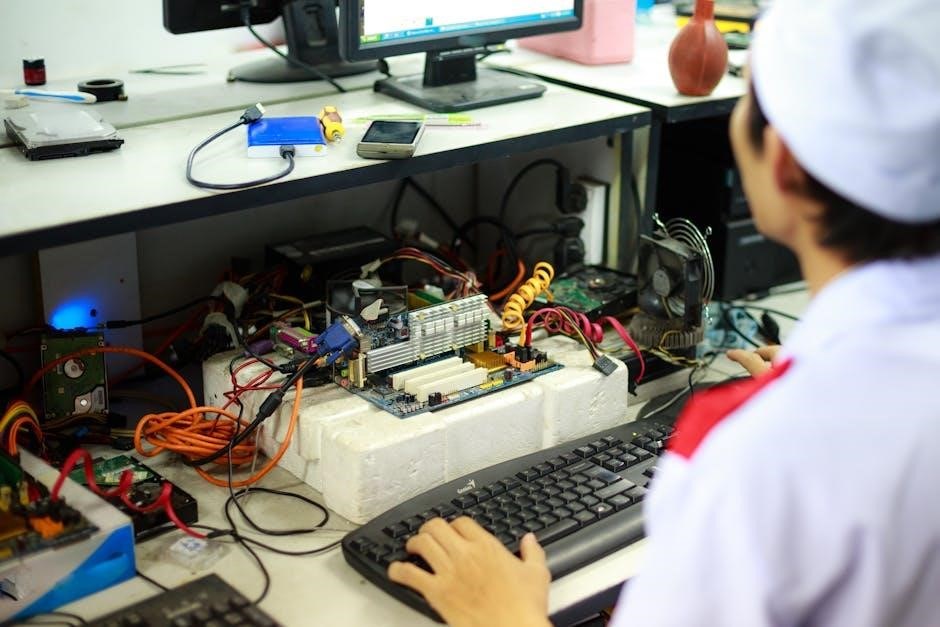
Computer forensics, a branch of digital forensics, focuses on the recovery and investigation of data found on digital devices. It employs scientific methods and specialized tools to identify, preserve, analyze, and present digital evidence in a legally admissible format. This discipline goes beyond simply retrieving deleted files; it involves reconstructing events, uncovering hidden data, and establishing timelines.
The field is essential in modern investigations, as traditional methods often fall short when dealing with the complexities of digital crimes. It’s a hybrid investigative method, crucial for solving crimes where digital evidence plays a key role. Forensic examiners must understand operating and file systems to effectively extract and analyze data, ensuring accuracy and efficiency throughout the investigation process.
The Importance of Digital Evidence
Digital evidence has become paramount in modern investigations, often surpassing traditional forms of proof. Its significance stems from the pervasive nature of technology in nearly all aspects of life, meaning crucial information frequently resides on digital devices. This evidence can establish facts, link individuals to events, and reconstruct timelines with a level of detail previously unattainable.
The increasing sophistication of criminals necessitates a robust approach to evidence handling. Digital forensics provides the techniques and tools to accurately acquire, authenticate, and analyze this data. Properly handled digital evidence is often more reliable and compelling in court, aiding law enforcement and corporate security personnel in building strong cases.

The Computer Forensics Investigation Process
Investigations follow a defined process: preparation, evidence identification, and preservation – ensuring a systematic and legally sound approach to digital data analysis.
Phase 1: Preparation and Authorization
Initial preparation is paramount, demanding meticulous planning and securing proper authorization before commencing any investigative actions. This phase involves defining the scope of the investigation, identifying key personnel, and establishing clear objectives.
Legal considerations are central; investigators must ensure compliance with relevant laws and regulations regarding data access and handling. Obtaining necessary warrants or permissions is crucial to maintain the integrity and admissibility of evidence. A detailed plan outlining procedures for evidence collection, preservation, and analysis is developed.
Furthermore, documenting all steps taken during preparation is essential for maintaining a clear audit trail and demonstrating due diligence throughout the investigation process. This foundational stage sets the stage for a successful and legally defensible outcome.
Phase 2: Identification of Evidence
Evidence identification involves a systematic search for potentially relevant digital artifacts across various devices and storage media. This includes computers, smartphones, servers, and cloud storage, focusing on locating data related to the investigation’s scope. Investigators must consider all possible data sources, including files, emails, logs, and metadata.
A crucial aspect is recognizing the different types of digital evidence and understanding their potential significance. This requires expertise in operating systems, file systems, and data structures. Proper documentation of identified evidence, including its location, hash values, and a brief description, is vital for maintaining chain of custody.
Careful consideration must be given to avoid altering or damaging potential evidence during the identification process, ensuring its integrity for subsequent analysis.
Phase 3: Preservation of Evidence
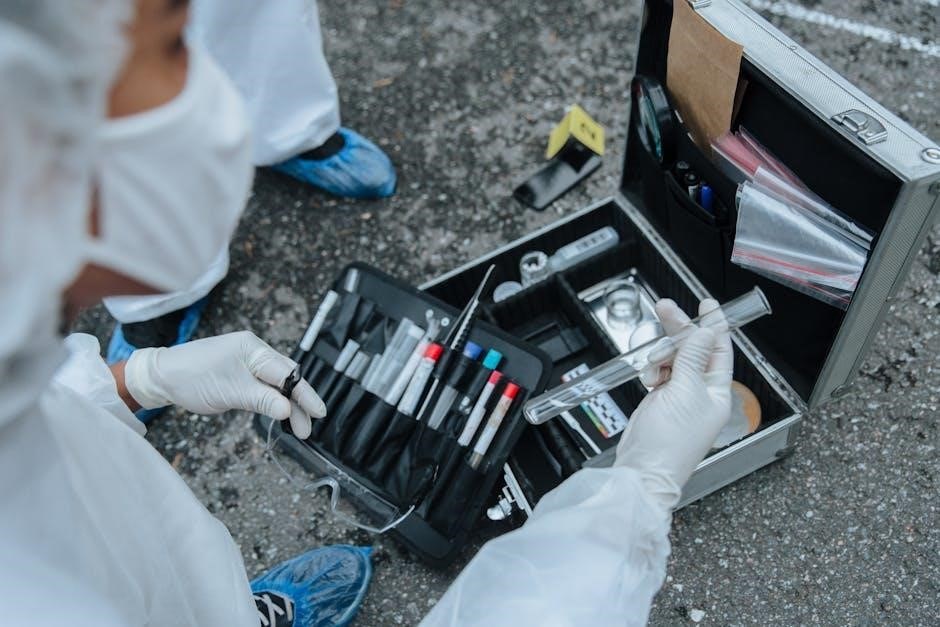
Evidence preservation is paramount in computer forensics, ensuring data integrity and admissibility in court. This phase focuses on preventing any alteration, damage, or destruction of potential evidence. A core technique is creating forensic images – bit-by-bit copies of storage devices – using specialized tools.
Write-blockers are essential to prevent accidental writes to the original evidence during imaging. Maintaining a strict chain of custody, documenting every handling step, is critical. Secure storage of original evidence and forensic images is also vital, protecting them from unauthorized access or environmental hazards.
Proper preservation safeguards the evidence’s authenticity and reliability, upholding the investigation’s credibility and legal defensibility.

Evidence Acquisition Techniques
Acquiring digital evidence demands specialized methods like imaging, cloning, and, when necessary, advanced techniques such as software fault injection and unsoldering.
Imaging and Cloning
Imaging and cloning are fundamental techniques in digital forensics, ensuring data preservation during evidence acquisition. Imaging creates a bit-for-bit copy of the entire storage device, including allocated and unallocated space, providing a complete representation of the original data. This process is crucial for maintaining the integrity of the evidence.
Cloning, while similar, often refers to copying only the used portions of a drive. However, in forensic contexts, imaging is generally preferred to capture all data, even deleted files or remnants of past activity. Utilizing appropriate tools and adhering to strict procedures are essential to avoid altering the original evidence during these processes. These techniques are vital for accurate examination and analysis.
Forensic Data Capture Tools
Forensic data capture tools are specialized software and hardware used to acquire digital evidence securely and reliably. These tools ensure data integrity by creating forensically sound images, often utilizing write-blocking devices to prevent accidental modification of the source media. Popular options include hardware imagers that directly copy data at the bit level, and software solutions offering advanced imaging and verification features.
Selecting the right tool depends on the type of storage media and the investigation’s specific requirements. Proper validation of the captured image, through hashing algorithms, is crucial to demonstrate its authenticity and admissibility in court. These tools are essential for a defensible forensic process.
Software Fault Injection
Software Fault Injection is an advanced technique employed when standard data acquisition methods fail, often involving deliberately introducing errors into a system’s software or hardware to bypass security measures or unlock hidden data. This is typically used on devices with locked or damaged storage, or those employing anti-forensic techniques.
It requires a deep understanding of the target system’s architecture and potential vulnerabilities. While powerful, fault injection carries risks of data corruption or device damage, demanding careful planning and execution. It’s a last-resort method, requiring specialized expertise and thorough documentation to maintain the integrity of the investigation.
Unsoldering Flash Memory
Unsoldering Flash Memory represents a highly invasive data recovery technique utilized when conventional methods prove ineffective, particularly with physically damaged or secured storage devices. This process involves carefully removing the flash memory chip directly from the circuit board, bypassing any software or firmware protections.
It demands specialized tools and a skilled forensic examiner to avoid irreversible damage to the chip and its contained data. Once removed, the chip can be read using dedicated hardware readers. This method is often employed when dealing with encrypted devices or those employing advanced anti-forensic measures, but it voids any warranties and carries significant risk.
Examination and Analysis of Digital Evidence
Digital evidence requires meticulous examination, utilizing file system, operating system, registry, and log file analysis to reconstruct events accurately.
File System Analysis
File system analysis is a cornerstone of digital forensics, involving the examination of how data is stored and organized on a storage device. Understanding the specific file system – such as NTFS, FAT32, or ext4 – is paramount. Investigators analyze metadata, including timestamps, file attributes, and allocation units, to reconstruct file activity and identify deleted files.
This process often reveals crucial evidence regarding file creation, modification, and access times. Techniques like slack space analysis and unallocated space examination can uncover remnants of previously deleted data. Recovering fragmented files and identifying hidden partitions are also key aspects. Thorough file system analysis provides a detailed timeline of events and helps establish the context of digital evidence within an investigation.
Operating System Artifact Analysis
Operating System Artifact Analysis focuses on extracting valuable information left behind by the OS itself, beyond standard files. This includes examining event logs, temporary files, and browser history – remnants of user activity often overlooked. Analyzing prefetch files reveals frequently used applications, while shellbags detail user interactions with folders.

Investigating the Windows Registry provides insights into system configurations, installed software, and user preferences. Examining user profiles and analyzing the Master File Table (MFT) are also crucial. These artifacts collectively paint a detailed picture of system usage, user behavior, and potential malicious activity, aiding in reconstructing events and identifying evidence.
Registry Analysis
Registry Analysis is a cornerstone of computer forensics, offering a wealth of information about system configuration and user activity. The Windows Registry stores settings for the OS and applications, revealing installed software, recent file access, and user preferences. Examining specific registry keys can uncover evidence of malware, unauthorized access, and hidden files.
Forensic investigators analyze keys related to USB device connections, network settings, and browser history. Timestamps within the registry provide valuable timeline data. Understanding the registry’s structure and utilizing specialized tools are essential for effective analysis, allowing reconstruction of events and identification of crucial evidence.
Log File Analysis
Log File Analysis is a critical component of digital investigations, providing a chronological record of system events. These files, generated by the operating system, applications, and security devices, document user actions, errors, and network activity. Analyzing logs helps reconstruct timelines and identify suspicious behavior.
Investigators examine event logs, system logs, and application-specific logs for evidence of intrusions, data breaches, or policy violations. Correlation of log entries from multiple sources provides a comprehensive view of events. Specialized tools assist in parsing and filtering large log files, revealing patterns and anomalies that might otherwise go unnoticed, aiding in accurate forensic conclusions.
Advanced Forensic Techniques
Advanced techniques like data carving and steganography detection are essential for recovering hidden or deleted data during complex investigations.
Data Carving
Data carving is a sophisticated technique employed when traditional file system metadata is unavailable or compromised, allowing forensic investigators to recover files from unallocated disk space. This process involves scanning the storage medium at a raw, binary level, searching for file headers and footers – unique signatures that identify the beginning and end of specific file types.
Unlike file system analysis, data carving doesn’t rely on the file system’s structure. It’s particularly useful in cases of severely damaged or formatted drives, or when dealing with anti-forensic techniques designed to obscure file system information. However, it’s important to note that carved files often lack their original filenames, timestamps, and directory structures, requiring further analysis to establish context and relevance.

Successful data carving demands a deep understanding of file formats and their corresponding signatures, alongside specialized tools capable of performing the intricate scanning and reconstruction processes.
Steganography Detection
Steganography involves concealing information within seemingly innocuous files – images, audio, video, or text – making it a challenging aspect of digital forensics. Detection requires specialized techniques beyond standard file analysis, as the hidden data isn’t readily apparent.
Forensic investigators employ statistical analysis, examining files for anomalies in their least significant bits (LSB), where data is often hidden. Tools analyze file headers, compression ratios, and entropy levels, searching for irregularities indicative of concealed content. Visual inspection of images can reveal subtle distortions, while audio analysis might detect faint background noises.
Successfully uncovering steganographic data demands a keen eye for detail, a thorough understanding of steganographic techniques, and the utilization of dedicated software designed to reveal hidden messages.
Timeline Analysis
Timeline analysis is a cornerstone of digital investigations, reconstructing events by chronologically ordering digital artifacts. This process involves correlating data from various sources – file system timestamps, event logs, registry entries, and web browser history – to establish a sequence of actions.
Investigators utilize specialized tools to parse and normalize timestamps, accounting for time zone differences and system clock inaccuracies. The resulting timeline provides a narrative of user activity, revealing critical events like file access, program execution, and network connections.
Effective timeline analysis aids in identifying patterns, establishing causality, and corroborating or refuting witness statements, ultimately providing a clear picture of what transpired on a digital system.

Reporting and Documentation
Detailed reports and meticulous documentation are essential in forensics, ensuring evidence integrity and legal admissibility throughout the investigation process.
Creating a Forensic Report
A comprehensive forensic report is the culmination of the investigation, detailing all procedures and findings. It must clearly articulate the scope, methodology, and results of the analysis, ensuring clarity for both technical and non-technical audiences. The report should include a summary of the evidence collected, the tools utilized, and a step-by-step account of the examination process.
Crucially, it needs to present findings objectively, avoiding speculation or bias. All conclusions must be supported by concrete evidence and documented artifacts. The report should also address any limitations encountered during the investigation and potential impacts on the findings. Proper formatting, including clear headings, tables, and exhibits, enhances readability and professionalism. Finally, a robust report is vital for legal proceedings and demonstrating the integrity of the investigation.
Chain of Custody Documentation
Maintaining a meticulous chain of custody is paramount in computer forensics, ensuring the integrity and admissibility of digital evidence. This documentation precisely records every individual who handled the evidence, from seizure to presentation in court. Each transfer must be dated, timed, and accompanied by the signatures of both the relinquishing and receiving parties.
Detailed records should include the location of the evidence, any alterations made (with justification), and the purpose of each handling event. A broken chain of custody can render evidence inadmissible, jeopardizing the entire investigation. Therefore, strict adherence to established protocols and thorough documentation are essential for a legally sound and reliable forensic process.

Legal Considerations in Computer Forensics
Admissibility of evidence and adherence to search and seizure laws are critical; proper legal procedures guarantee the validity of forensic findings in court.
Admissibility of Evidence
Ensuring digital evidence is admissible in court requires strict adherence to established legal principles and forensic best practices. Maintaining a meticulous chain of custody is paramount, documenting every handler and action taken with the evidence. Evidence must be authentic, meaning its integrity hasn’t been compromised during acquisition and analysis.
Proper documentation, utilizing forensically sound tools, and following validated procedures are essential. Any deviation from these standards can lead to evidence being deemed inadmissible. Courts require proof that the evidence presented is a true and accurate representation of the original data, free from alteration or contamination.
Furthermore, investigators must demonstrate their expertise and the reliability of the techniques employed. Understanding relevant case law and legal precedents is crucial for successfully presenting digital evidence in a legal setting.
Search and Seizure Laws
Computer forensics investigations are heavily governed by search and seizure laws, primarily the Fourth Amendment in the United States, protecting against unreasonable searches. Obtaining a valid search warrant, based on probable cause, is often necessary before seizing digital devices. Warrants must specifically detail the scope of the search, limiting it to relevant evidence.
Exceptions to the warrant requirement exist, such as consent searches or exigent circumstances involving imminent danger or evidence destruction. Investigators must understand jurisdictional differences in these laws.
Properly documenting the search process, including the date, time, location, and items seized, is critical. Failure to comply with these legal requirements can result in evidence being suppressed, potentially jeopardizing the entire investigation and prosecution.

Tools Used in Computer Forensics
Specialized software like EnCase and FTK are essential for acquiring, analyzing, and reporting on digital evidence during investigations, ensuring accuracy.
EnCase
EnCase is a widely recognized and powerful forensic software suite utilized by law enforcement, government agencies, and corporate entities globally. It provides a comprehensive platform for digital investigations, encompassing data acquisition, forensic imaging, data processing, and in-depth analysis.
Its capabilities extend to examining various file systems, recovering deleted files, and identifying crucial artifacts within digital evidence. EnCase supports scripting for automation, allowing examiners to customize workflows and efficiently handle large datasets. The software’s reporting features facilitate the creation of detailed forensic reports, essential for legal proceedings.
Furthermore, EnCase offers advanced features like data carving, password cracking, and registry analysis, making it a versatile tool for uncovering hidden or obscured information. Its robust features and reliability have established it as an industry standard in the field of computer forensics.
FTK (Forensic Toolkit)
FTK (Forensic Toolkit), developed by AccessData, is another leading software solution employed extensively in digital forensics investigations. It offers a robust suite of tools for acquiring, processing, and analyzing digital evidence from a wide range of sources, including hard drives, solid-state drives, and mobile devices.
FTK excels in its indexing capabilities, enabling rapid searching and retrieval of relevant data within massive datasets. It supports various file system types and provides advanced features like data carving, registry analysis, and timeline creation.
The toolkit’s reporting features allow for the generation of comprehensive forensic reports, crucial for presenting findings in court. FTK’s user-friendly interface and powerful analytical capabilities make it a valuable asset for forensic examiners seeking to efficiently uncover and interpret digital evidence.